
How AI Is Changing What We Know About Horses
Explore how AI and continuous behavioural monitoring are reshaping horse health and welfare in 2026, from colic detection to foaling alerts and stable security.
· Faunos
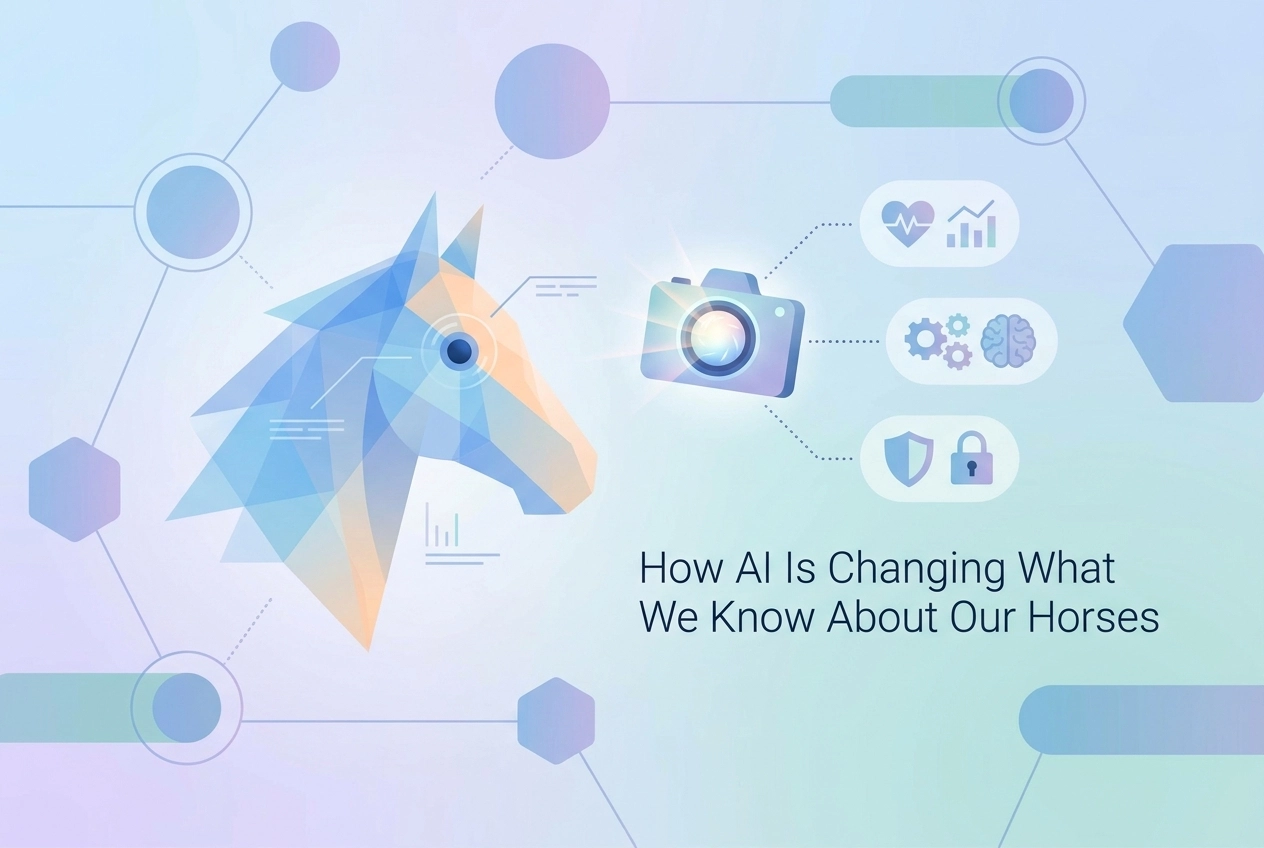
For centuries, horse owners have relied on instinct, experience, and tradition to understand their animals. But something remarkable is happening in the equine world, and it is changing everything we thought we knew. Artificial intelligence is transforming how we care for, train, and connect with the horse in ways that were simply unimaginable just a decade ago.
Whether you are a first-time horse owner or someone just beginning to explore the equestrian world, you are stepping into an exciting era. AI-powered tools can now detect subtle changes in a horse's movement, monitor health patterns, and even analyze behavior with stunning accuracy. These technologies are no longer reserved for elite professionals or large racing stables. They are becoming accessible to everyday horse owners like you.
In this analysis, we will break down exactly how AI is reshaping our understanding of horses, what specific tools and technologies are leading the charge, and what this means for beginners who want to give their horses the best possible care. No technical background is required. Just an open mind and a love for these incredible animals.
The Stable Blind Spot: What Happens When No One Is Watching
Even in the most attentively managed professional stables, horses spend the vast majority of their lives unobserved. A typical care routine involves morning feeds, an afternoon check, and an evening round. That structure leaves multiple windows, each several hours long, where a horse is essentially alone. Overnight, the stable goes quiet, and whatever happens inside a box during those hours remains invisible until someone walks through the door at dawn.
This structural gap in observation is not a failure of care. It is simply the reality of how traditional equine management works. The challenge is that horses do not schedule their health events around human routines. Early signs of colic, casting, acute stress, disrupted sleep, or changes in eating and drinking behaviour can develop, escalate, and sometimes become critical during precisely those unobserved periods. By the time a morning check reveals a problem, hours may already have passed.
The significance of this gap has now reached mainstream recognition. In July 2026, The Economist published a feature on health tech and AI entering equestrianism, confirming that this is a present-tense inflection point rather than a distant forecast. When a publication of that editorial authority covers a topic, it signals genuine commercial and cultural momentum, not speculation. The scientific community has reached a parallel conclusion. A December 2025 peer-reviewed scoping review published in the Journal of Equine Veterinary Science examined the impact of technology on monitoring horse behaviour and health, formally establishing continuous monitoring as a legitimate, scientifically evaluated category rather than a niche commercial claim.
What these two moments share is a recognition that the old model, built entirely on scheduled human presence, is no longer the only option available. Technology now makes it possible to observe a horse continuously, to learn what normal looks and behaves like for that specific animal, and to detect meaningful deviations before they become emergencies.
That raises a question worth sitting with: what does it genuinely mean to know what your horse is doing? And what does modern AI-powered monitoring make possible today that simply was not within reach before?
Why Horse Behaviour Is One of the Most Reliable Health Signals
Horses are prey animals, and that biological reality shapes everything about how they communicate distress. Over millions of years of evolution, showing weakness meant attracting predators. As equine trainer Shelby Dennis puts it directly: a horse that appears physically compromised is the first to be picked off. This survival instinct is so deeply embedded that horses will suppress and internalise pain signals long after a problem has begun developing. By the time visible distress becomes obvious to a caregiver, the underlying condition is frequently already at an advanced stage. For owners and care teams, this creates a critical challenge: the moment a horse looks unwell is often not the beginning of the problem. It is closer to the end of a silent progression that may have been underway for hours.
The clinical implication is significant. Research into equine discomfort published in the journal Animals by veterinary researchers at the University of Pennsylvania confirms that pain and discomfort behaviours in horses tend to be especially subtle, and are frequently missed even by experienced professionals, including long-time trainers, veterinarians and veterinary technicians. The researchers, drawing on decades of clinical observation, developed a formal Equine Discomfort Ethogram precisely because these early signals are so easy to overlook. Changes in movement, altered posture, reduced willingness to engage, social withdrawal and shifts in feeding behaviour all appear in the ethogram as meaningful indicators across multiple body systems, including musculoskeletal and gastrointestinal sources. These are not vague impressions. They are observable, codifiable behaviours that carry diagnostic weight.
Sleep and rest patterns are among the clearest examples. Horses require genuine lying-down rest to complete full sleep cycles, including the REM sleep that is physiologically necessary for recovery and cognitive function. When a horse stops lying down normally, whether due to pain, stress or environmental disruption, the consequences compound over time through fatigue and compromised immune and physical recovery. Similarly, horses are natural trickle feeders, designed to spend the majority of their day grazing. Any meaningful reduction in eating or drinking time is a statistically significant deviation from baseline, and understanding equine pain research consistently identifies changes in feed intake and water consumption as early indicators of gastrointestinal illness, systemic stress and pain.
Veterinary science has long recognised this. Behavioural observation is not a supplementary tool in equine medicine; it is a primary one. The development of formal ethograms, validated pain scales and structured behavioural assessments reflects a clinical tradition that treats behaviour as objective data. Continuous, automated monitoring is a natural extension of this established practice, applying the same observational principles that vets use during examinations, across the full 24 hours that caregivers cannot be present to watch.
What a WHOOP for Horses Actually Means
If you have ever used WHOOP to track your health and recovery, you will be familiar with its central promise: rather than telling you how you compare to an average person, it learns what is normal specifically for you, then alerts you when something meaningful changes. A seasoned endurance athlete and a recreational runner completing the same workout at the same pace will receive entirely different strain scores, because WHOOP calibrates every measurement to each individual's cardiovascular baseline. The platform is not judging you against a population; it is learning your personal norm and flagging departures from it. That single design principle is what makes the WHOOP analogy so useful when explaining what Faunos does for horses.
The Personalisation Principle, Applied to Horses
The insight that individual baseline monitoring outperforms population-average comparisons translates directly into equine care. Every horse has its own behavioural fingerprint: a particular rhythm of movement and rest, characteristic eating and drinking patterns, a typical level of stable activity at different times of day. What looks like restlessness in a naturally calm horse may be entirely routine for a more reactive one. Faunos is built on exactly this understanding. Using contactless, camera-based AI, the platform observes each horse continuously and learns what normal looks like for that specific animal. Once a reliable baseline is established, the system can identify when behaviour deviates from it in ways that are meaningful, not just statistically different.
Clinically Grounded, Not Algorithmically Arbitrary
What separates Faunos from a standard monitoring tool is the quality of the intelligence behind it. The platform was co-created by AI engineers, equine specialists and veterinarians, with veterinary expertise embedded within the team from the beginning. The behavioural indicators the system tracks, including movement, lying, standing, restlessness, eating, drinking and general stable activity, were selected because they carry clinical significance. A horse lying down for abnormally long periods, for example, is a recognised early indicator of colic. Reduced drinking, disrupted rest patterns and unusual nocturnal activity are similarly meaningful signals to experienced equine professionals. Faunos monitors all of these continuously, 24 hours a day, without requiring any device to be fitted, adjusted or worn.
That contactless approach is more than a practical convenience. Horses cannot consent to wearing a device, cannot remove one that is causing discomfort, and require consistent human intervention to maintain any wearable correctly. By working entirely through camera-based AI, Faunos removes those variables entirely and provides uninterrupted observation regardless of what is happening in the stable.
Independent Scientific Validation
Faunos is currently undergoing scientific evaluation in partnership with Ghent University, an institution internationally recognised for its veterinary medicine and animal health research. This collaboration provides independent academic scrutiny of the platform's approach, placing it in a different category from products that rely solely on proprietary performance claims. As a December 2025 scoping review in the Journal of Equine Veterinary Science confirmed, the scientific community is now actively examining technology-based behavioural monitoring as a legitimate field of equine health research. Faunos's work with Ghent University positions it at the intersection of that emerging evidence base and real-world professional practice.
Contactless Monitoring Versus Wearables: A Meaningful Distinction
The equine wearables market is well-established and clearly segmented. Products currently available include heart rate monitors, GPS trackers, activity monitors, smart halters, smart saddle pads and biosensors, and every category shares one defining characteristic: each device requires direct, sustained physical attachment to the horse. According to market research, activity trackers alone held a 34.6% product share in 2025, confirming that physical contact with the animal is the operating assumption across the entire wearable segment. This model works in many contexts, but it carries structural trade-offs that matter deeply in equine care.
The Welfare Case for Going Contactless
Physical attachment introduces risks that are far from trivial. Device loss, rubbing, pressure points, skin irritation and stress responses from handling are inherent to the wearable model, not exceptions to it. These concerns become especially significant for horses in post-surgical recovery, those with skin sensitivities or animals that resist equipment and handling. A horse that pulls at a device, or whose stable manager removes a sensor for grooming and does not immediately replace it, produces a data gap at precisely the moment continuous observation matters most. A contactless, camera-based system removes these failure points entirely. There is no battery to deplete, no fit to adjust, no tolerance threshold to manage. The monitoring continues regardless of what is happening in the stable, without placing any additional physical burden on the horse.
A Global Trend That Validates the Approach
The direction of intelligent health monitoring is unambiguous. Approximately 40% of newly launched wearable devices in 2026 are expected to include AI-enabled functions, according to current industry analysis, confirming that embedding intelligence into health observation is now a mainstream expectation rather than a premium feature. The global wearable health market reached a projected $70.3 billion in 2026 with 614 million unit shipments, representing a 17.1% year-over-year increase. This scale matters because it situates AI-based horse monitoring within a much larger, validated shift toward continuous, personalised, data-driven health insight. As The Economist reported in July 2026, health technology and AI are now entering equestrianism as credible, practical tools rather than novelties.
Faunos operates from exactly this foundation. Rather than adding another device to a horse's body, it uses camera-based AI to observe continuously, learn individual behavioural baselines and surface meaningful changes, combining the benefits of persistent monitoring with none of the welfare compromises that physical attachment requires.
Colic: Why Earlier Detection Changes Everything
Colic is the most common equine health emergency and, depending on severity, one of the most dangerous. Research from the University of Florida IFAS Extension confirms that colic accounts for 31.2% of deaths in horses aged 1 to 20 years, making it the single leading cause of death in that age group. Approximately 11% of colic cases are fatal, and 1.2% require surgery. These are not abstract statistics for anyone who has managed horses. They represent real animals, real decisions made under pressure, and real outcomes that hinge on how quickly the right people are notified.
The Hours That Matter Most
What makes colic particularly difficult to manage is that the behavioural signals often appear well before the condition becomes visibly urgent. Early indicators include reduced appetite, increased restlessness, abnormal or prolonged lying behaviour, repeated attempts to lie down and rise, pawing at the ground, and looking toward the flank. These are not dramatic signals. In a horse viewed briefly during a scheduled check, several of them could be overlooked entirely or dismissed as minor restlessness. Yet early recognition of pain is a measurable factor in improving outcomes, and research published in the Equine Veterinary Journal states plainly that an owner's ability to recognise colic and seek assistance is a critical first step in determining the case outcome.
The challenge is that recognising these early changes requires knowing what is normal for that specific horse, and observing them at the moment they first appear.
The Detection Gap in a Typical Stable Routine
Consider a straightforward scenario. A horse develops colic at midnight. The stable operates on a twice-daily checking routine, with the next visit scheduled for the morning feed round at seven o'clock. That represents a potential gap of seven hours or more during which the condition progresses unobserved. In some cases, mild colic resolves without intervention. In others, delayed response allows the condition to escalate toward surgical territory. The difference between those outcomes is often measured in hours.
Faunos is designed specifically to close that gap. The platform monitors each horse continuously, building an individual behavioural baseline and detecting meaningful deviations as they occur. When a horse that normally settles quietly begins showing repeated lying and rising, prolonged restlessness or abnormal movement patterns, Faunos generates an alert, allowing the owner or care team to respond in the middle of the night rather than discovering the problem at breakfast.
Faunos does not diagnose colic. What it provides is objective, timestamped behavioural data and earlier notification, giving veterinarians and owners the information they need to make faster, better-informed decisions. That distinction matters. A platform that surfaces genuine anomalies at two in the morning, supported by a continuous record of what happened and when, places the right people in a position to act while acting still makes a meaningful difference.
Foaling Monitoring: Beyond the Traditional Alarm
For breeders, the moment a traditional foaling alarm fires is already, in one important sense, too late for preparation. Conventional foaling alarm systems are designed around a single physical trigger: detecting when a mare lies flat in the recumbent position associated with active parturition, or when a specific postural threshold is crossed. That design is deliberate and functional, but it means the alert arrives only once labour is already underway. There is no preceding window, no earlier signal, and no opportunity to be present and prepared before the critical moment begins.
The timing challenge this creates is significant. Research published in the Journal of Animal Science and Technology confirms that approximately 86% of Thoroughbred foalings occur between 19:00 and 07:00, meaning the overwhelming majority of births happen precisely when human supervision is at its lowest. Missing a foaling, or arriving moments too late to assist with a complication, carries real consequences for both mare and foal welfare and represents a meaningful source of economic loss for breeders and stud farms.
What Behaviour Tells Us Before the Alarm Fires
Scientific observation has long documented that mares exhibit meaningful behavioural changes in the hours preceding foaling. Rest patterns shift. Movement and restlessness increase. Activity levels change in ways that are detectable and consistent, even if they are subtle. These changes do not follow a universal template; they reflect each mare's individual baseline, which is precisely why they are difficult to monitor through occasional human checks alone.
Faunos addresses this gap directly. Rather than waiting for a physical threshold to be crossed, the platform continuously monitors each mare's movement, rest, standing, lying and activity patterns against her own established normal. When behaviour begins shifting meaningfully from that personal baseline, Faunos alerts breeders and stable managers, providing an earlier notification window before physical labour begins. This is not a replacement for a traditional foaling alarm; it is a complementary layer that starts working sooner.
A More Complete Picture for Breeders and Stud Farms
For operations managing multiple mares across a foaling season, the combination of continuous behavioural monitoring and a reliable physical alarm offers a materially more complete approach than either tool alone. The physical alarm confirms the moment of labour. Behavioural monitoring provides the lead-up context, the earlier signal that something is changing, and the opportunity to be present and ready rather than simply reactive.
This layered approach is particularly valuable overnight, covering precisely the hours when most foalings occur and when timely human intervention is most likely to make a difference. Faunos delivers this coverage contactlessly and continuously, without placing any device on the mare, which also preserves her natural behaviour in the pre-foaling period.
Sleep, Rest and Recovery: The Metrics Most Owners Miss
Of all the dimensions of equine welfare, sleep may be the one most consistently overlooked by even experienced owners. Unlike feeding, exercise or visible lameness, rest quality is largely invisible during daylight hours, because the sleep behaviour that matters most happens at night, in silence, when no one is watching.
Why Recumbency Is Not Optional
Horses have a unique sleep architecture shaped by millions of years as prey animals. They can rest lightly and doze while standing, using a passive stay apparatus that locks their limbs in place. However, achieving REM sleep requires full lateral recumbency, lying completely flat on their side, because the muscle relaxation that characterises REM sleep cannot occur while the stay apparatus is engaged. Research published in Frontiers in Veterinary Science identifies disrupted or insufficient recumbency as a genuine welfare concern, with documented consequences for behaviour, immune function, athletic performance and physical safety. Horses deprived of adequate lying-down rest can develop what appears as narcoleptic-type collapse, as accumulated REM pressure eventually overrides wakefulness. A 24-hour sleep laboratory study involving 36 horses recorded between 4 and 199 collapse episodes during the monitoring period, illustrating how serious this deficit can become.
The Gap Between Awareness and Action
Research by Kym Griffin at Nottingham Trent University, drawing on a survey of 714 horse owners representing 976 horses, found that 94.38% of owners recognised lying down as important. Yet only 18.07% reported actually monitoring their horse's rest. That gap between recognition and practice exists largely because overnight observation has historically required either physical presence in the stable or retrospective review of hours of CCTV footage. Neither option is practical for most owners on a nightly basis.
Faunos addresses this directly. By continuously tracking lying and standing patterns, rest frequency and duration, the platform builds an individual baseline for each horse and surfaces meaningful changes without requiring any manual review. If a horse that typically lies down for two periods overnight stops doing so, or begins lying down far more than usual, an alert is generated. The kind of visibility that research frames as a welfare indicator for geriatric and orthopaedically compromised horses becomes accessible without specialist equipment or overnight staffing.
Recovery Monitoring and Stress-Related Disruption
For horses in rehabilitation or recovering from surgery, the pattern of rest and activity is clinically meaningful information. Lying down too little may reflect pain-avoidance; lying down excessively may indicate systemic weakness. Either deviation provides an objective data point that supports, rather than replaces, clinical veterinary assessment. Faunos generates a continuous record of rest and activity across each 24-hour period, giving veterinarians and owners an objective measure of progress that is otherwise impossible to obtain without round-the-clock observation.
Stress-related disruption adds another layer of complexity. Changes in stable companions, environmental noise, shifts in management routine or the onset of low-grade pain can all fragment a horse's sleep before any outward sign becomes obvious. A 2026 study from Hartpury University found that increased exercise extended average sleep bout length from 5.33 minutes to 10.79 minutes, with altered patterns persisting even after exercise returned to normal. This illustrates how sensitively sleep responds to management changes and how prolonged the effects can be. Continuous overnight monitoring makes it possible to identify not just that sleep disruption is occurring, but when it began and whether it correlates with a specific change in the horse's environment or schedule.
Stable Security and the Ring-Style Monitoring Experience
Beyond behavioural health, Faunos extends its intelligence into an area that many horse owners only consider after something has already gone wrong: stable security and real-time oversight. The platform delivers what is best described as a Ring-style stable experience, giving owners and care teams structured, 24/7 remote access to a clear timeline of stable events, activity and behavioural changes. Rather than confronting hours of unedited footage after an incident, users can navigate a chronological summary of exactly what happened, when it happened, and whether it was meaningful. For anyone who has spent time with a consumer home security app, the logic will feel immediately familiar, applied here with a depth of equine intelligence that no generic camera system can replicate.
Configurable Alerts Built Around Your Stable
One of the most practical dimensions of this experience is the ability to configure custom alerts for the events that matter most to each user. Faunos can notify you when a person enters the stable, when a horse has left or is missing from its box, when unusual nighttime activity is detected, or when a behavioural pattern emerges that may indicate a welfare concern. These alerts are not generic motion triggers. They are built on the same AI understanding of normal equine behaviour that powers Faunos's health monitoring, meaning notifications arrive when the system identifies something genuinely worth attention rather than simply detecting movement.
Security Oversight for Professional Environments
For professional stables, veterinary clinics and breeding facilities where multiple animals and staff are present throughout the day and night, human-presence detection and missing-horse alerts provide a meaningful additional layer of oversight. Knowing that an unauthorised person has entered a stable block, or that a horse is no longer in its box, in real time rather than after the fact, represents a qualitative shift in how security is managed at scale.
The timeline view also serves a quietly powerful retrospective function. If a horse appears stiff, withdrawn or off its feed on a Tuesday morning, a care team can review Monday night's activity log in minutes rather than scrubbing through raw footage to find the relevant window. This ability to reconstruct overnight events from structured data is something generic CCTV simply cannot offer.
Standard cameras record. Faunos interprets. That distinction, between passive footage and active behavioural intelligence with proactive alerts, is what places Faunos in a category of its own as a complete equine monitoring and early-warning platform.
Who Uses Continuous Horse Monitoring and Why
Continuous horse monitoring serves a wide and growing community of users, each with distinct responsibilities and distinct reasons for needing reliable, around-the-clock insight into horse behaviour and welfare.
Private owners represent the broadest group. For anyone caring for a horse without a full-time yard team, the hours between evening check and morning feed are a genuine blind spot. Illness, injury, and distress do not keep office hours. Faunos gives private owners the ability to monitor their horses remotely during nights, trips away, or periods of recovery, receiving a meaningful alert when something changes rather than discovering a problem the following morning. The platform does not require owners to review hours of footage; the AI surfaces what matters, when it matters.
Professional sport stables use Faunos across a different set of priorities. At the elite level, the difference between peak performance and underperformance often comes down to recovery quality, behavioural stress indicators, and subtle changes in daily routine that would be impossible to quantify without continuous data. Faunos allows performance teams to monitor multiple horses simultaneously, building an objective picture of each animal's baseline and flagging deviations that could indicate fatigue, discomfort, or the early stages of a health concern before it affects training.
Veterinarians and equine clinics benefit from the platform's ability to provide continuous behavioural data between clinical visits. Rather than relying solely on what an owner reports or what a brief examination reveals, a veterinarian can access objective, timestamped records of how a horse has been moving, resting, eating, and behaving during recovery. This supports more informed clinical decisions and can provide early evidence that a follow-up visit is warranted. A 2025 editorial in Frontiers in Veterinary Science specifically highlighted the interdisciplinary value of combining behavioural, physiological, and environmental data streams in equine health monitoring, reinforcing the clinical case for platforms like Faunos.
Breeders and stud farms have a particularly acute need for overnight and continuous monitoring. Foaling rarely happens at a convenient moment, and the consequences of a missed or delayed response can be severe. Faunos complements traditional foaling alarm systems by tracking the behavioural changes that precede birth, giving caregivers more time to prepare and respond. Beyond foaling, the platform supports breeders in tracking individual mare behaviour across breeding cycles, building a detailed behavioural record that informs management decisions over time. Faunos's participation as a sponsor at the 2026 European Society for Equine Reproduction conference reflects this focused commitment to reproductive monitoring applications.
Equestrian organisations and rehabilitation centres use continuous monitoring to meet the welfare standards that structured care environments demand. Rehabilitation in particular requires close attention to how a horse is loading a recovering limb, how its rest patterns are evolving, and whether stress or discomfort is influencing behaviour between sessions. As research into technology for monitoring horse behaviour and health continues to mature, continuous objective data is increasingly understood as a credible means of documenting care quality and responding promptly when a horse's condition changes in ways that warrant professional attention.
The Science Behind the Platform
Understanding why Faunos works as a monitoring platform requires looking at how it was built, not just what it does. The platform was co-created by AI engineers, equine specialists and veterinarians working together from the ground up. This interdisciplinary foundation matters because it determines which behaviours the system actually monitors. Rather than selecting data points based on what is easy to measure, the team designed the platform around indicators that have genuine clinical significance: changes in movement patterns, lying behaviour, restlessness, eating frequency, drinking activity and stable routine. The result is a system where every alert is grounded in the kind of observable behaviour that a trained equine professional would recognise as meaningful.
Independent Validation and Academic Scrutiny
Faunos is currently undergoing scientific evaluation in partnership with Ghent University, a leading European institution in veterinary medicine and animal health research. This collaboration provides independent academic scrutiny of the platform's methodology and outputs, which is significant in a market where many technology products make claims that have never been independently examined. The partnership represents ongoing evaluation rather than concluded findings, but the institutional relationship itself signals a commitment to rigorous, evidence-based development that goes beyond standard commercial testing.
The broader scientific community has also moved firmly in this direction. A scoping review examining the impact of technology for monitoring horse behaviour and health, indexed on PubMed, confirms that peer-reviewed literature is now actively engaging with camera and sensor-based behavioural monitoring as a legitimate research discipline. A separate 2025 editorial published in Frontiers in Veterinary Science reinforced this, dedicating specific attention to advances in technology for monitoring horse welfare and health. Faunos's approach sits squarely within this validated scientific conversation, not outside it.
Objective Data That Supports, Not Replaces, Expertise
The wider health technology market reflects the same recognition. Clinical-grade health monitoring devices are the fastest-growing segment of the broader wearables and health tech market, expanding at approximately 25% annually, a rate that outpaces the overall sector and reflects genuine demand for continuous, objective health data with real clinical value.
Faunos does not position itself as a diagnostic tool and does not replace veterinary expertise. What it provides is something genuinely difficult to obtain otherwise: continuous, personalised, objective behavioural data for each individual horse, every hour of every day. That data gives owners, care teams and veterinarians a clearer, faster basis for deciding when attention is needed, and when a situation can wait. In a field where timing so often determines outcomes, that is not a marginal improvement.
What Modern Horse Monitoring Makes Possible
Knowing your horse used to mean being present. It meant early mornings, late nights, and the kind of accumulated observation that only physical proximity could provide. In 2026, that paradigm has shifted in a meaningful and lasting way. Continuous, intelligent, personalised behavioural data is now accessible regardless of where you are, and peer-reviewed veterinary science, coverage in publications including The Economist, and the broader AI health monitoring sector all confirm that this is no longer an emerging possibility. It is an established direction of travel.
For owners, the most productive question to ask is a practical one: when is your horse genuinely unobserved, and what could change in those windows without your knowledge? Overnight, during turnout, in the hours after a veterinary procedure, or simply between the morning and evening check, meaningful behavioural shifts can occur that no periodic visual inspection would capture. Evaluating whether your current tools provide visibility into those specific gaps is the starting point for understanding what continuous monitoring actually offers.
For veterinary professionals and care teams, the value sits in a different place. Objective, timestamped behavioural data provides a dimension of clinical insight that scheduled visits cannot replicate, particularly for post-treatment recovery tracking and the early detection of anomalies between appointments. Research published in peer-reviewed veterinary science increasingly supports the integration of sensor-based and camera-based behavioural data into professional decision-making frameworks, not as a replacement for clinical judgement, but as a reliable complement to it.
Faunos represents the convergence of veterinary expertise, AI engineering and equine welfare insight that this moment calls for. Built alongside equine specialists and veterinarians, evaluated scientifically with Ghent University, and used by leading professional stables and equestrian organisations, it is designed to help anyone responsible for a horse's wellbeing respond faster and with greater confidence, wherever they are.